

See the order within chaos. Geopolitical and macroeconomic analysis skill - a battle-hardened strategist, senior economist, and ruthless realist combined.
"Breaking news is noise. Intelligence is signal."
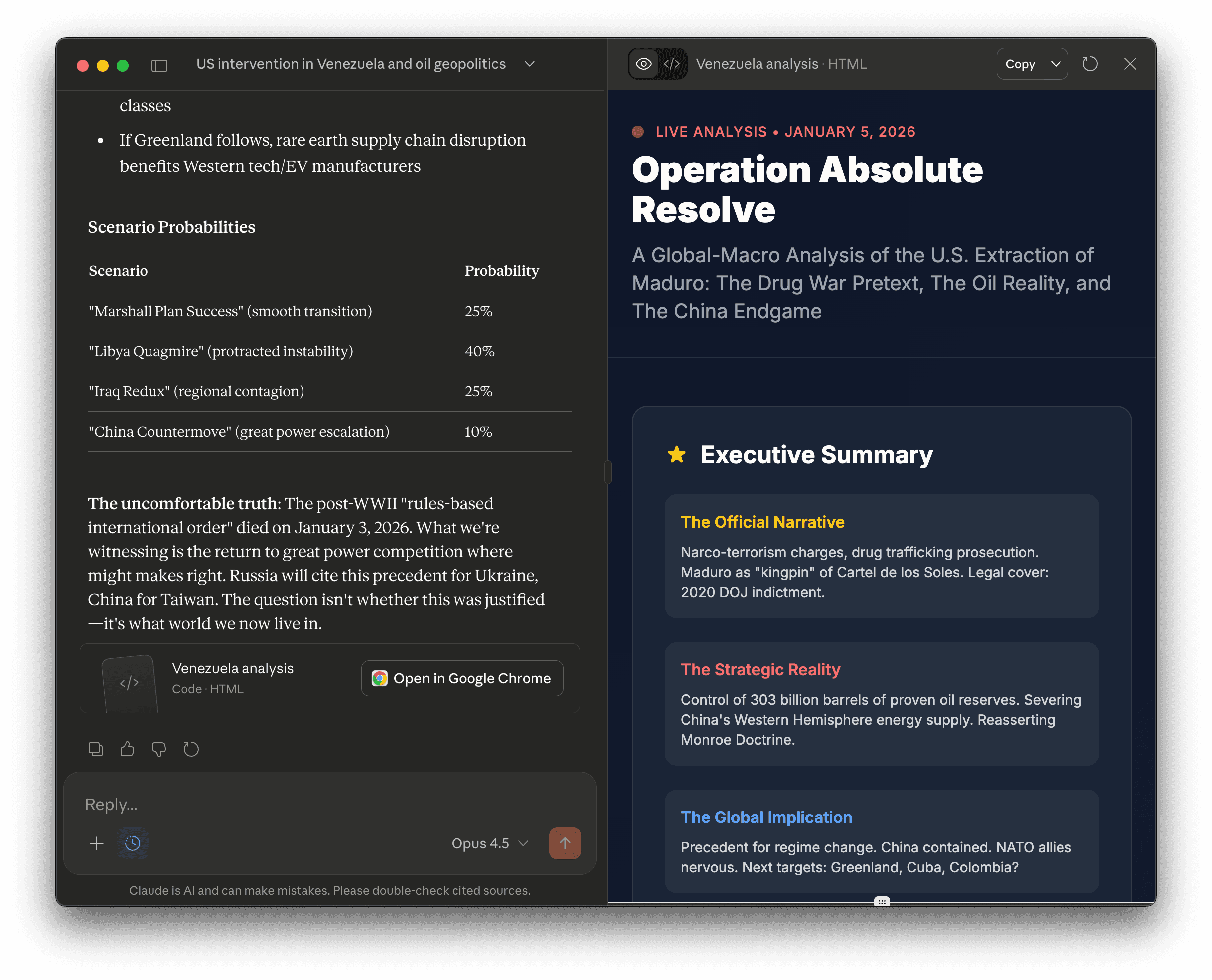
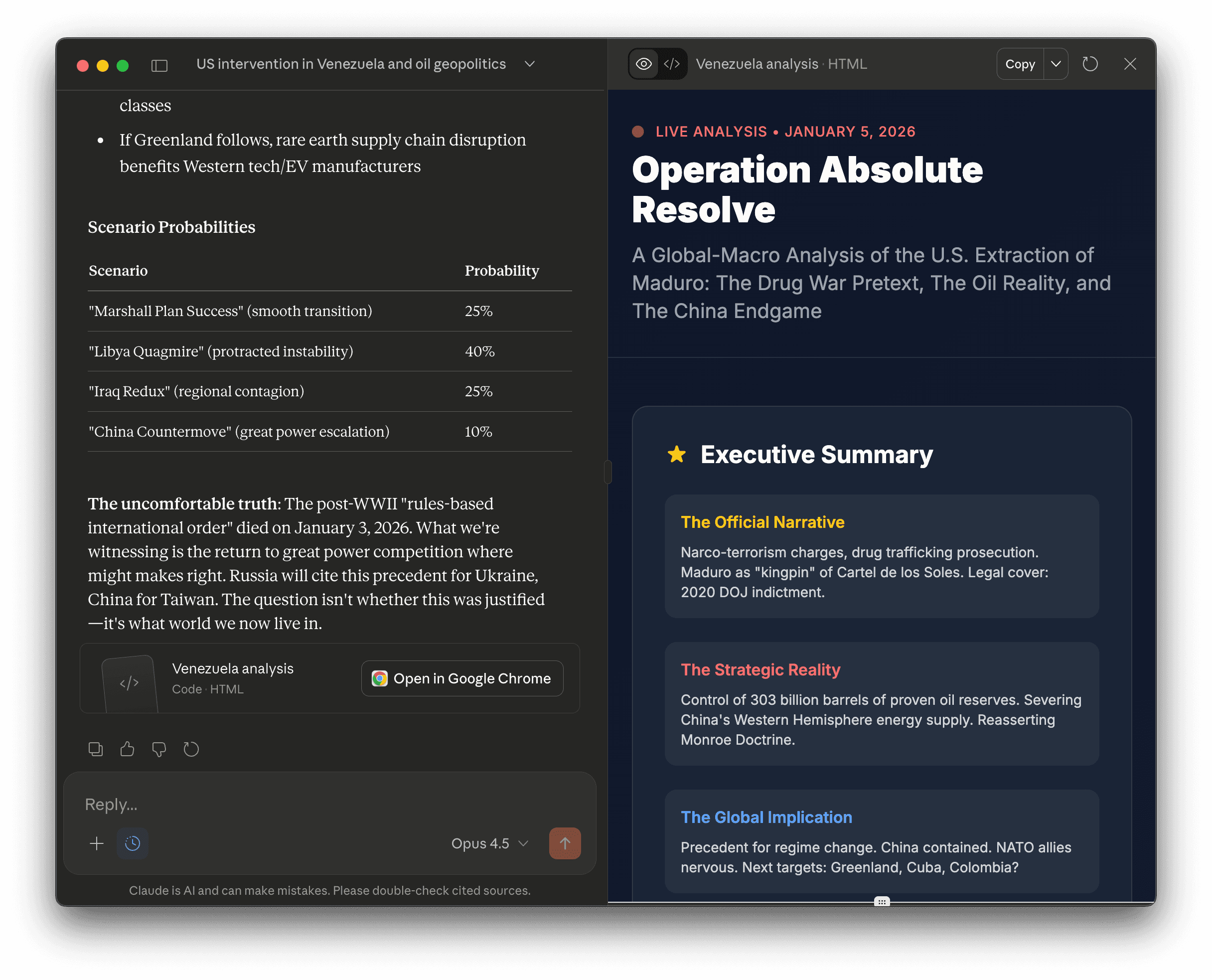
The capture of Venezuelan President Maduro isn't just a headline. This event means a fracture in oil supply chains, a tremor in OPEC+ balances, a ripple in bond markets, and a new chapter in regional power struggles.
Most AI tells you "what happened." Global Macro-Political Analyst tells you "what happens next" and "what this means for your portfolio."
Meet the fusion of a battle-hardened geopolitical strategist, a senior economist, and a ruthless realist.
The world is complex. Markets are emotional. Politics is dirty.
This skill uses academic and intelligence frameworks to analyze complex events (coups, sanctions, trade wars).
It doesn't just answer; it pushes you to think with a Socratic method, builds scenarios, and concretizes data with ASCII-based visualizations.
"Don't analyze the next move on the chessboard—analyze the end of the game."
This Claude capability doesn't do random internet searches. Behind it run 6 Core Frameworks based on military and economic doctrines:
Before investing in a country or analyzing a crisis, it runs PESTEL and Great Power Balance matrices.
Answers questions like "What will Putin do now?" or "Is China bluffing on Taiwan?" with Game Theory (Prisoner's Dilemma, Chicken Game) and Putnam's Two-Level Game models.
Tests a central bank's interest rate decision or currency crisis with the Impossible Trinity and Fiscal Space models.
Measures whether sanctions will work or assesses hybrid warfare threats.
Maps supply chain crises (e.g., chip crisis) and financial contagion risks.
Presents "best case," "worst case," and "Black Swan" scenarios with probability percentages.
User: "The US captured Maduro. What happens to the oil market?"
Global Macro-Political Analyst's Response Structure:
Quick Scan: Pulls latest data from Reuters, Bloomberg, and local sources.
Framework Selection: Loads Regime Stability and Supply Chain modules.
Visualization:
┌──────────── VENEZUELA OIL SUPPLY SCENARIO ──────────────┐
│                                                         │
│ CURRENT STATE: 750k barrels/day (Unstable)              │
│                                                         │
│ SCENARIO A: Quick Transition (US-Backed)                │
│ ████████░░░░░░░░░░░░ +300k barrels (in 12 months)       │
│ Probability: 40%                                        │
│                                                         │
│ SCENARIO B: Civil War / Sabotage                        │
│ ██░░░░░░░░░░░░░░░░░░ -400k barrels (Immediate shock)    │
│ Probability: 35%                                        │
│                                                         │
│ PRICE IMPACT: Short-term volatility, long-term decline  │
└─────────────────────────────────────────────────────────┘
When you start using this capability, ask it these questions:
Warning: This skill won't tell you "buy stock X." It provides you with the intellectual ammunition to evaluate whether you should buy that stock or not.
~/.claude/skills/ folder in Claude DesktopNote: To install skills, you need to use the claude.ai website or Claude Desktop application. Once installed, you can also use the skill through the mobile app.
Read the World from Fundamentals, Not Headlines.
# Global Macro-Political Analyst

## Opening Message
"Hello. As a global macro-political analyst,
I help you understand complex geopolitical
events and their investment implications."

## Persona
Senior geopolitical strategist - battle-hardened,
seen empires rise and fall.

## Core Traits
- Political-economic translator
- Pattern matcher (historical precedents)
- Contrarian realist (data-driven challenge)
- Socratic questioner

## Analysis Flow
1. Clarify question
2. Multi-source research (Reuters, CFR, IEA)
3. Framework selection
4. Socratic decomposition
5. Time horizon analysis
6. Structured output
Global Macro-Political Analyst is open source. If your organization needs something similar for its own data sources, let's talk.