
It wouldn't be an exaggeration to call the last five years an "AI hurricane." It all started with tools like Midjourney and DALL-E turning our imagination into visuals. Right after, we met the primitive but revolutionary ChatGPT 3. Since then, with GPT-3.5, GPT-4, and countless competitors (Claude, Grok, etc.), AI has undergone an evolution at lightning speed.
Today, AI is everywhere in our lives. However, there's a problem: When we say AI, an overwhelming majority thinks of one interface: The chat box.
Everything is built on text-based dialogue. We write, AI writes back. Sometimes short, sometimes long paragraphs... This was revolutionary, yes. But now this model needs to move to the next stage.
Tired of Reading Text: The Current UX Problem
I believe AI's biggest problem right now is a bottleneck on the user experience (UX) side. Users shouldn't have to read so much text. We ask a question and get a massive block of text in return. We need to spend extra effort to "digest" the information.
Yet the answer we're looking for could perhaps be explained much more clearly with a simple comparison table. Maybe the process would be more understandable with a step-by-step visualized infographic. This text-only "ping-pong" model limits AI's potential and tires the user.
The Solution: Generative UI
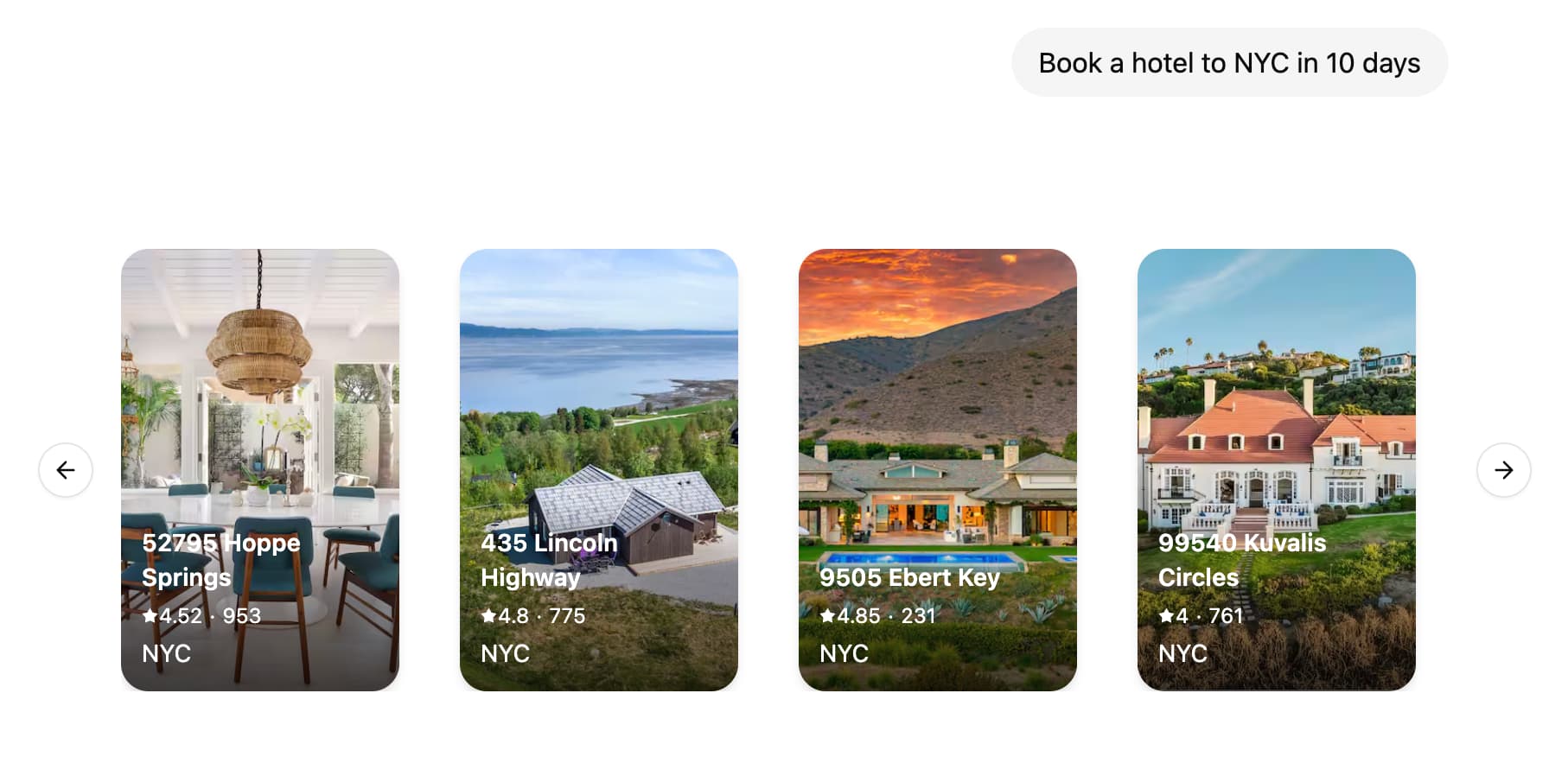
In my view, the solution to this problem is Generative UI. That is, AI responding not just with text during its dialogue with the user, but with interface components it generates instantly.
This doesn't mean AI stops writing text. It means that at the most necessary point in the conversation, text is replaced by a much more efficient visual component.
We designed our AI Agent on our website with exactly this vision. When a user asks the chatbot "What are your services?", instead of dumping a long paragraph, we present visual cards showing all our services. Users can click on these cards to read details in a pop-up window and even take direct action with the "Call-to-Action" (CTA) button there (e.g., "Request Demo").
This transforms a passive "reader" into an active "participant."
The Market's New Task: Following the Leaders
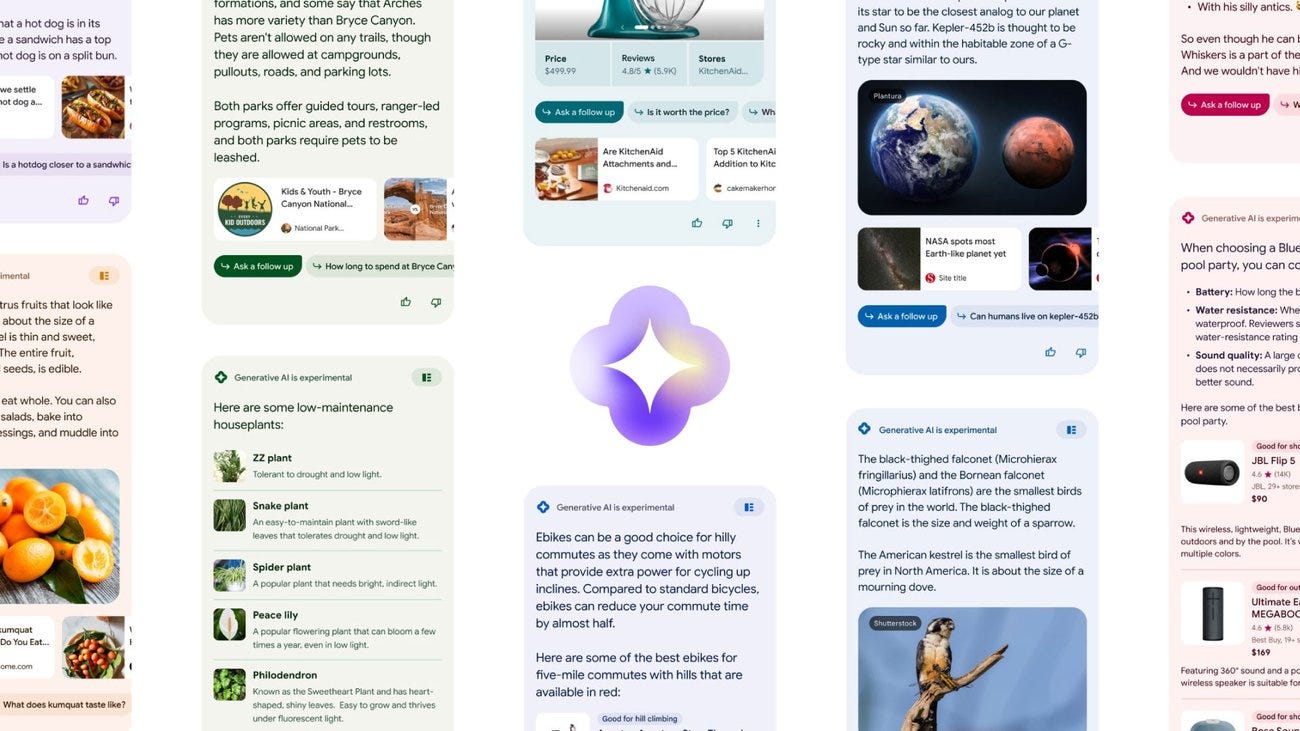
The main LLM (Large Language Model) providers aware of this change aren't sitting idle either. ChatGPT, Grok, and Claude now take care to produce visuals, tables, and even code blocks more frequently in their responses. Especially search-focused tools like Perplexity integrate relevant images into the interface at lightning speed when bringing web results.
Leaders have paved the way. Now the task falls to other companies that are "AI implementers." Take an airline company; from ticket purchase to check-in, from baggage tracking to post-flight feedback, it should be able to design the entire experience with a fluid Generative UI instead of text walls.
Or an investment company... Using AI agents in the new customer onboarding journey, it shouldn't just provide information to the customer; it should also give the customer a flawless "form filling experience" with instantly generated visuals, graphics, and interactive form fields.
Conclusion: Stop Thinking, Time to Take Action
The AI revolution may have started with text, but that can't be its final destination. Insisting on text-only chat interfaces is a betrayal of this technology's potential. Where we are today, AI's "chat" obsession has turned into the biggest obstacle to user experience.
The most fundamental rule of user experience design is not to tire the user, to impose the least cognitive load on them. However, current chat models do the opposite: They expect us to read long paragraphs, make an effort to filter information, and think about the next step. This is an inefficient and exhausting interaction model.
The Generative UI I advocate completely changes this equation.
We want much more than giving abstract commands (that is, typing into a chat box). We want to directly interact with objects on the screen, touch them, and get instant results.
This is exactly what Generative UI promises. Instead of presenting us with a boring text list starting with "Our services are: A, B, C...", it produces clickable, visual cards saying "Here Are Our Services." This transforms the user from a passive reader giving "indirect commands" to an active participant who can take "direct action."
We're giving control back to the user. When they click on a card and a pop-up opens instantly, or when they press a button and a form is triggered; these create a much more powerful sense of feedback and satisfaction than a textual response saying "Understood."
As design guru Steve Krug said years ago: "Don't Make Me Think."
This is exactly what Generative UI offers us: Read less, think less, do more. AI will stop being just an "information source" and become a true "interactive action partner" that generates instant interfaces for us and completes our tasks.
The future won't be shaped in text walls, but in these intelligent and generative interfaces.